
Best Time of Year to Pour Concrete in South Florida
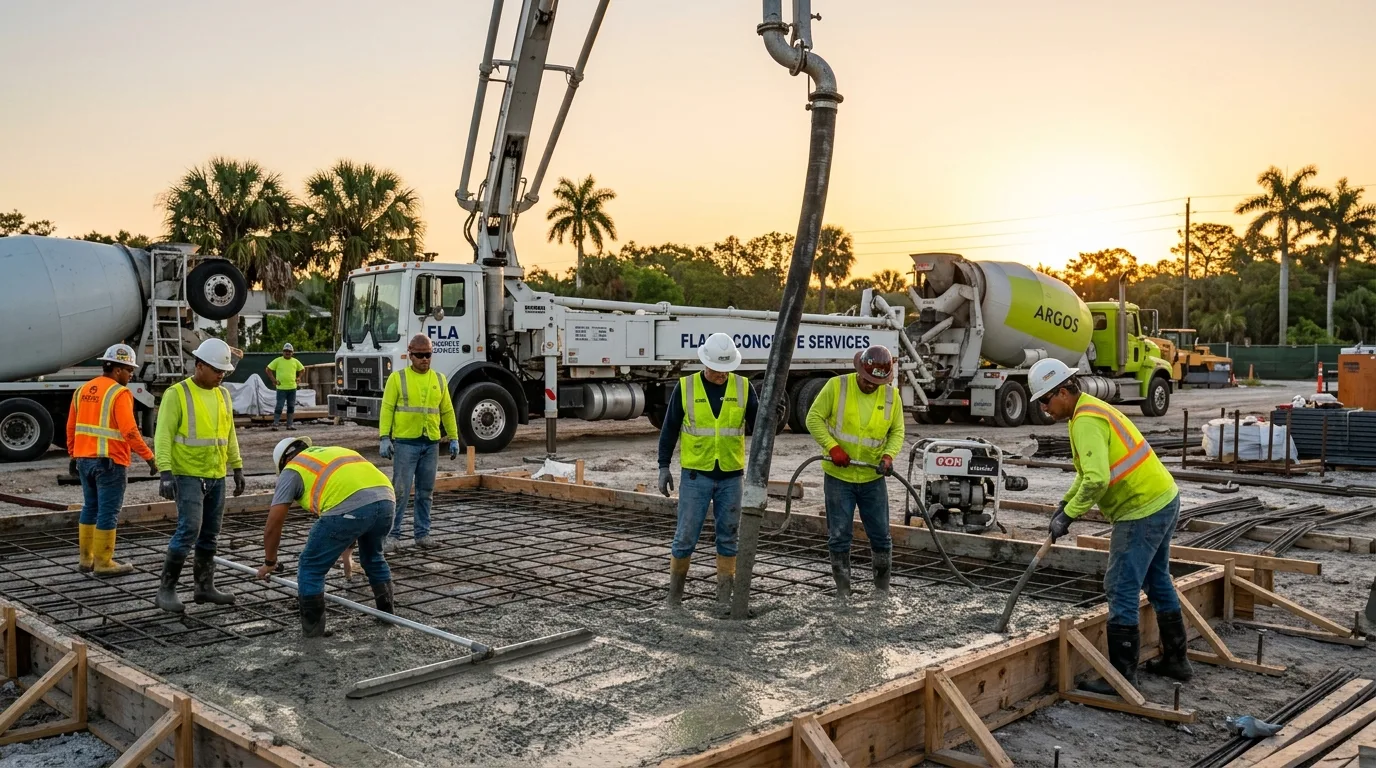
Timing a concrete project in South Florida isn’t just about contractor availability or your personal schedule — it’s a technical decision that directly affects how well the concrete cures, how long it lasts, and whether your project comes in on budget. The difference between pouring concrete in December versus July in Wilton Manors is the difference between a controlled, quality installation and a race against afternoon thunderstorms that can compromise the surface before it sets. In this post, we’ll cover why the season matters so much for concrete in South Florida, what risks wet-season pours carry, and how to plan your project for the best possible outcome.
Call +1(888)376-0955 to discuss your project timeline and book your pour date in the dry season window.
Why Timing Matters for Wilton Manors Homeowners
South Florida’s climate is unlike anywhere else in the continental United States, and it shapes every concrete installation decision made in Broward County. Here is the definitive local seasonal context for concrete work: the best time to pour concrete is November through April (dry season, temps 50–85°F, low humidity, minimal rain). The worst time is June through September (wet season, daily afternoon thunderstorms, temps regularly above 85°F causing rapid evaporation and cracking risk).
This isn’t a minor preference — it’s a meaningful quality and durability factor backed by concrete science. Here’s why each element of the wet season creates problems:
High temperatures above 85°F accelerate concrete’s hydration reaction, causing the surface to set faster than the interior. This differential curing rate creates internal stress that manifests as surface cracking, often visible within days of the pour. When ambient air temperature is above 90°F — common from June through September in Broward County — the rate of evaporation from the fresh concrete surface increases dramatically, potentially leading to plastic shrinkage cracking before the finishing crew can even complete their work.
Daily afternoon thunderstorms are the most operationally disruptive factor for concrete work in South Florida’s wet season. A concrete pour must be completed and covered before rain contacts the fresh surface; rain hitting unhardened concrete washes out cement paste, creates surface pitting, and weakens the surface layer permanently. In the wet season, forecasting a rain-free window is unreliable — storms can develop and move over Broward County in under an hour with little warning.
High humidity slows surface evaporation, which sounds counterintuitive as a problem after the rapid-evaporation issue just described — but the issue is that the two extremes (too fast and too slow) both represent departures from the controlled curing environment that produces the strongest concrete. High humidity combined with high temperatures creates an unpredictable curing environment that is more difficult to manage than the cooler, lower-humidity conditions of the dry season.
By contrast, the dry season from November through April provides exactly the conditions concrete needs: moderate temperatures that allow the hydration reaction to proceed at a controlled pace, low humidity that reduces the risk of both rapid evaporation and moisture-related surface issues, and minimal rainfall that makes pour scheduling reliable.
Seasonal Options for Concrete Work
November through April (strongly recommended): This is the ideal window for any concrete project in Wilton Manors and Broward County. Within this period, December through February is the single best window — temperatures are most stable, humidity is lowest, and afternoon rain is rare. Projects poured during this window have the best curing conditions, the most predictable finishing windows, and the lowest risk of weather-related complications.
October and May (marginal): These shoulder months can be workable in years where the wet season starts late or ends early, but they carry more risk than the core dry season months. If your project must happen in October or May, schedule the pour for early morning and plan for the possibility of afternoon weather delays.
June through September (not recommended for major pours): Wet season work is possible — experienced South Florida contractors have the equipment and protocols to manage hot-weather pours — but it should be avoided when scheduling flexibility exists. If a wet-season pour is unavoidable, expect additional costs for ice-cooled water in the mix, accelerated evaporation retarders, additional labor to ensure rapid finishing before weather develops, and potentially more intensive curing protocols.
Practical Uses: How Timing Affects Different Project Types
- Driveways: Larger pours with more exposed surface area are more vulnerable to both rapid evaporation and rain damage. Dry-season scheduling is especially important for driveways over 400 square feet.
- Patios and pool decks: Same considerations apply. Pool deck pours adjacent to water have additional humidity challenges; dry season reduces this variable.
- Slabs for new construction or additions: If your builder’s schedule allows flexibility, push for a dry-season pour on any concrete flatwork.
- Repair work: Small-scale crack repairs and patching are more forgiving of weather conditions than a full pour, but the dry season still provides better bonding conditions for repair mortars and epoxies.
- Stamped concrete: Stamped work has an even narrower timing window than plain concrete because the stamping must happen before the concrete firms up. Wet-season heat dramatically compresses this window. See our post on stamped concrete patios in Wilton Manors for more on how this works.
How to Plan Your Concrete Project Around the Season
The most common mistake Wilton Manors homeowners make is calling for concrete bids in June and expecting a quality pour by July. Here’s the reality of project timelines that should inform your planning:
Design and bidding: 1–2 weeks. Get multiple bids and compare scope, not just price. A thorough bid includes subbase preparation, rebar specification, finish details, sealing, and permit management.
Permitting: Broward County plan review takes up to 15 business days (three calendar weeks). For projects over $5,000, a Notice of Commencement must be filed before the first inspection. Full permitting timelines can run 4–6 weeks from application to permit issuance. See our complete guide to concrete permits in Broward County.
Contractor scheduling: Quality concrete contractors in Broward County fill up quickly during the dry season. November through April is the high-demand window; contractors who do good work often book out 4–8 weeks in advance during peak season.
Ideal planning timeline: If you want your concrete project poured during the optimal December–February window, begin the design and bidding process in September or October. Submit permit applications in October. Book your contractor by November for a January or February pour date.
Call +1(888)376-0955 to check current scheduling availability and get on the calendar for the upcoming dry season.
Cost Factors Related to Season and Timing
Concrete material costs don’t vary significantly with season, but several timing-related factors do affect your project budget:
Contractor pricing: Dry season is high demand, and some contractors adjust pricing accordingly. However, the quality difference between a skilled contractor doing a careful dry-season pour and a rushed wet-season pour typically outweighs any pricing premium.
Hot-weather concrete additives: If you’re doing a wet-season pour, ice-cooled mix water, retarders, and evaporation retarder compounds add material cost. Some contractors include these in their base bid; others price them as surcharges.
Extended curing measures: Wet burlap, plastic sheeting, and curing compounds are more critical in hot-weather pours and add labor and material cost.
Weather delays: Wet-season work carries the risk of pour-day weather delays that affect scheduling and can result in material waste if a ready-mix truck arrives and the weather prevents the pour. Clarify in your contract who bears the cost of weather-related delays.
Standard Broward County pricing remains $3.94–$7.87 per square foot for standard concrete flatwork and $14–$28 per square foot for decorative and stamped work, regardless of season — but the conditions under which that concrete is poured meaningfully affect its long-term performance.
Frequently Asked Questions
Can concrete be poured during South Florida’s wet season at all?
Yes — experienced contractors pour concrete in the wet season regularly. The key is early morning scheduling (pours typically start at 7:00 AM before afternoon storms develop), vigilant weather monitoring, and proper hot-weather concrete protocols. However, the risk of weather-related complications is meaningfully higher than dry-season work, and the results are more dependent on weather luck than controlled conditions.
How long does fresh concrete need to be protected from rain?
Concrete needs to be protected from rain until it has achieved initial set — typically 6–8 hours after finishing under normal conditions, but potentially longer in high-humidity conditions that slow the hydration reaction. Rain before initial set can permanently damage the surface. Rain after initial set but before final cure (28 days) is generally not harmful and may actually assist curing by keeping the slab moist.
Does the season affect how long I need to wait before using my new concrete?
The waiting period before vehicle traffic (typically 7 days) and full curing (28 days) is based on the concrete reaching specific strength levels. In cooler dry-season temperatures, concrete can actually cure slightly more slowly than in moderate warmth — but this is not a meaningful practical difference for most residential projects. The concern runs the other direction: extremely hot wet-season temperatures can cause rapid surface set while the interior remains soft, which is why hot-weather protocols focus on slowing the surface curing rate.
Timing is one of the most controllable variables in a concrete project’s long-term success, and in South Florida it’s a variable with real consequences. Planning your pour for the November–April dry season gives your concrete the best possible start and significantly reduces the risk of weather-related complications.
Call +1(888)376-0955 to discuss project timing and get on our schedule for the dry season. We serve Wilton Manors, Fort Lauderdale, Oakland Park, and all of Broward County.
Related Posts: