
How Long Does Concrete Last in Florida's Climate?
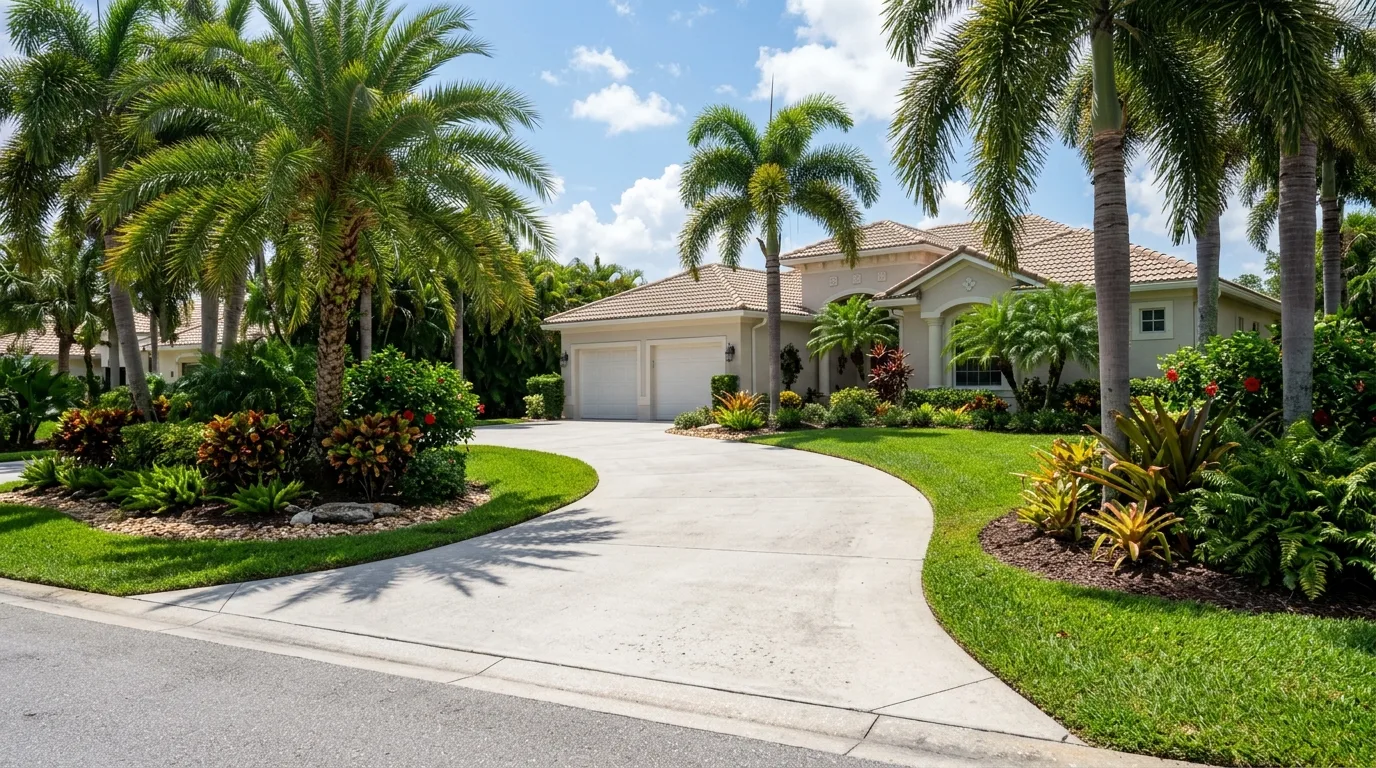
Homeowners across Wilton Manors and Fort Lauderdale often ask the same question before investing in a new driveway, patio, or walkway: how long will it actually last here? It’s a fair question. Concrete that performs for 40 or 50 years in cooler, drier climates can show significant deterioration in 10 to 15 years in South Florida if it isn’t installed and maintained correctly. In this post, we’ll cover how Florida’s specific climate conditions affect concrete longevity, what realistic service life looks like for different applications, and what you can do to extend the lifespan of any concrete surface you have.
Call +1(888)376-0955 to speak with our team about a new installation or maintenance plan for your concrete in Broward County.
Why Concrete Lifespan Is Different in Wilton Manors
Broward County sits on the Atlantic Coastal Ridge with oolitic limestone bedrock overlaid by sandy fill. Sandy soils drain rapidly but have poor load-bearing without proper compaction; oolitic limestone near surface can create uneven settlement. South Florida’s hot-humid climate — wet season (June–September) with daily thunderstorms and hurricane risk, dry season (November–April) 50–85°F — means concrete curing and work scheduling are significantly affected. Salt air from the Atlantic accelerates corrosion of uncoated metal reinforcement; UV radiation degrades unsealed concrete surfaces faster than in northern climates.
Three forces work simultaneously against concrete in South Florida. Salt air drives chloride ions into the concrete matrix, corroding any steel reinforcement and causing the slab to fracture from within. UV radiation breaks down the cement paste at the surface, creating a porous layer that accelerates subsequent deterioration. And the wet-season cycle — months of daily saturation followed by rapid drying — creates expansion and contraction stress that widens any existing cracks and introduces new ones. None of these forces operates in isolation; they compound each other.
Realistic Concrete Lifespan by Application
Driveways (standard broom finish): With proper installation and no maintenance, expect 15 to 20 years before significant structural deterioration. With regular sealing every two to three years and prompt crack repair, a well-installed driveway in Broward County can reasonably last 30 to 40 years.
Pool decks: Pool decks face the most aggressive combination of factors — constant exposure to pool chemicals, water, UV, and foot traffic. Unsealed or improperly sealed pool decks in South Florida typically need resurfacing every 10 to 15 years. With appropriate sealing and regular maintenance, the structural slab beneath decorative surfaces can last 25 to 35 years before replacement is warranted.
Sidewalks and walkways: Similar to driveways in load and exposure, sidewalks typically last 20 to 30 years with moderate maintenance. Tree root intrusion is the biggest accelerator of sidewalk failure in Wilton Manors — root barriers and proper placement away from large trees can significantly extend service life.
Patios and screen enclosure floors: These surfaces see less vehicle traffic but remain exposed to UV and salt air. Properly sealed, they can last 25 to 40 years. Unsealed, surface deterioration begins within 3 to 5 years and accelerates from there.
Foundation slabs: Well-engineered and properly poured foundation slabs in South Florida are designed for a 50-year service life or longer. The key variables are rebar coverage, concrete mix design, and quality of the sub-base compaction. Slabs poured on poorly compacted fill, or with inadequate cover over reinforcement, fail significantly sooner.
Options and Materials That Affect Longevity
High-performance concrete mixes use lower water-to-cement ratios and sometimes include fly ash or silica fume as supplementary cementitious materials. These mixes are denser and less permeable — a direct benefit in South Florida’s chloride-heavy environment.
Epoxy-coated rebar provides a protective barrier against chloride corrosion and is increasingly specified for coastal applications in Broward County. The cost premium over standard rebar is modest relative to the service life extension it provides.
Fiber reinforcement — synthetic polypropylene or steel fibers mixed into the concrete — reduces early shrinkage cracking and adds toughness to the finished slab. It complements rather than replaces conventional rebar for structural applications.
Penetrating sealers (silane-siloxane) are the single most effective maintenance tool for extending concrete life in South Florida. They penetrate the concrete matrix and repel water and chlorides without forming a surface film that can peel or delaminate. Applied every two to three years, they directly address the primary degradation mechanisms.
Acrylic and polyurethane topcoat sealers form a protective surface layer and add color or sheen. They are widely used on pool decks and decorative concrete. These require more frequent reapplication — typically every one to two years — but provide excellent UV and moisture resistance when maintained.
Practical Steps to Extend Concrete Life
- Schedule dry-season pours: Best time to pour concrete is November through April, when temperatures are 50–85°F, humidity is lower, and rain is minimal. Wet-season pours risk rapid evaporation during curing, which causes surface cracking.
- Seal within 30 days of installation: New concrete should be allowed to cure fully, then sealed before it is exposed to weather and salt air.
- Reseal every two to three years: Inspect annually — if water no longer beads on the surface, resealing is overdue.
- Fill cracks immediately: Every unfilled crack is a direct pathway for salt and moisture to reach reinforcement steel.
- Manage drainage: Keep water moving away from slabs. Pooling water beneath or around slabs saturates the sandy sub-base and accelerates settlement.
- Install root barriers: Near any significant trees, root barriers at the time of installation prevent the root intrusion that causes sidewalk and driveway cracking.
Want a concrete assessment or maintenance plan? Call +1(888)376-0955 — we’ll evaluate your current surfaces and give you honest recommendations.
Cost Factors
New concrete installation in Broward County runs $3.94–$7.87 per square foot for standard finishes. Extending concrete life through sealing and maintenance costs a fraction of replacement. Concrete repair — when damage is caught at the surface stage — runs $6.50–$14.00 per square foot, which is still significantly less than full replacement. The math strongly favors maintenance over deferred care in South Florida’s accelerated deterioration environment.
The most expensive concrete is the concrete you replace. Proper installation followed by a consistent sealing and inspection schedule is the most cost-effective approach across any concrete surface in Broward County.
FAQs
How can I tell if my concrete is at the end of its service life?
Signs that replacement rather than repair is warranted: structural cracks with significant displacement, widespread spalling exposing corroded rebar, pervasive sub-base failure causing multiple sunken sections, and concrete that crumbles or breaks apart under normal loads. Surface damage alone — staining, scaling, hairline cracks — rarely indicates end of life.
Does the brand of concrete matter for longevity?
The concrete mix design matters more than the brand. Key variables are the water-to-cement ratio (lower is better for durability), aggregate quality, and whether supplementary materials like fly ash are used. A licensed contractor with local experience specifies the right mix for South Florida conditions.
Is stamped or decorative concrete less durable than standard concrete?
Stamped concrete has the same structural properties as standard concrete when poured to the same specifications. The decorative finish layer requires more diligent sealing — the additional surface texture creates more area for UV and chloride to act on. With proper sealing every one to two years, stamped concrete performs well in South Florida’s climate.
Protect your concrete investment with the right installation and maintenance approach. Call +1(888)376-0955 or request a free estimate. We serve Wilton Manors, Fort Lauderdale, and all of Broward County.
Related posts: