
Signs Your Concrete Needs Repair (and What to Do About It in Wilton Manors)
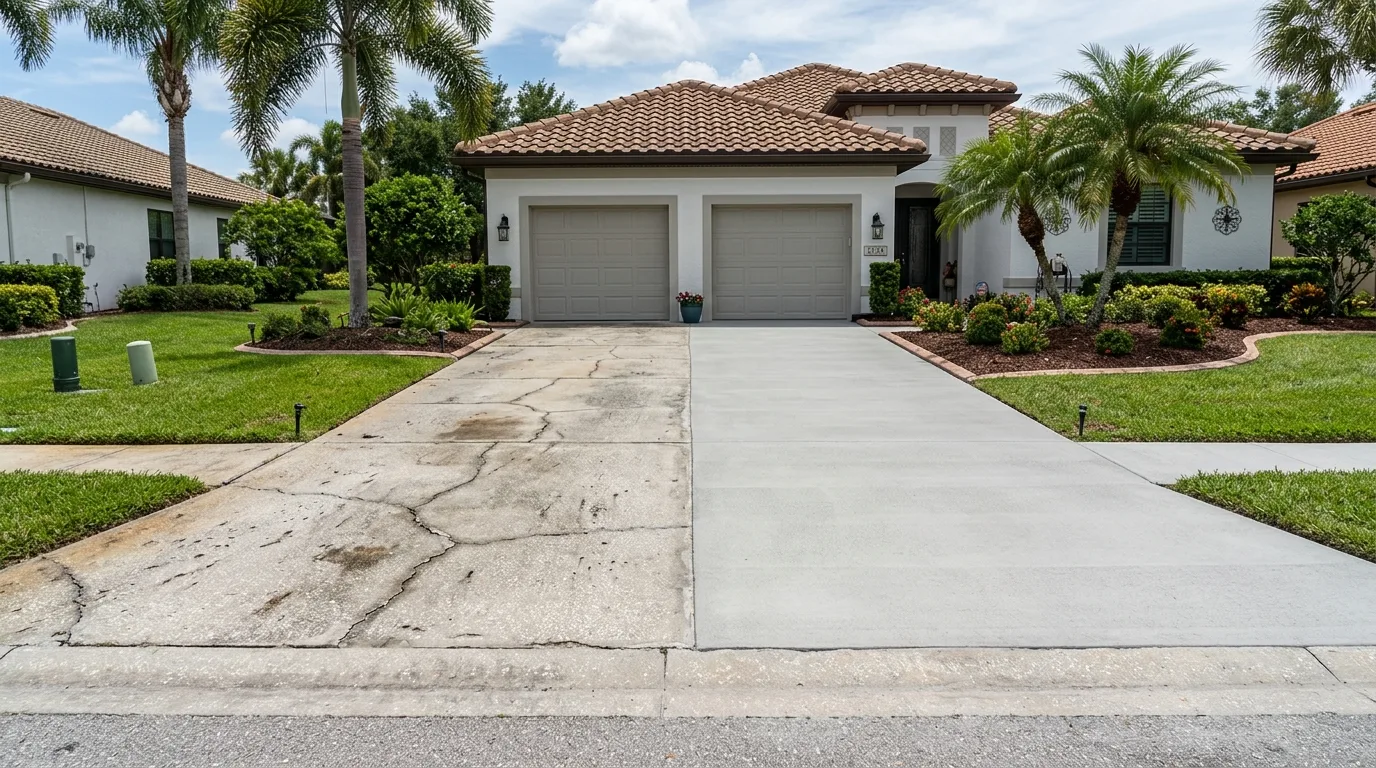
Concrete is one of the most durable building materials available, but even well-installed slabs in Wilton Manors will eventually show signs of wear. South Florida’s climate is particularly hard on concrete — the combination of intense UV radiation, high humidity, wet-dry cycles, and the unique soil conditions of Broward County create conditions that accelerate common forms of deterioration. Catching problems early and repairing them promptly is far less expensive than waiting until full replacement is necessary. In this post, we’ll cover the most common warning signs of concrete damage, what causes them in our local environment, a clear framework for repair-versus-replace decisions, what your repair options are, and what they cost.
Call +1(888)376-0955 to schedule a free concrete inspection and repair estimate in Wilton Manors and Broward County.
Why Concrete Repair Matters for Wilton Manors Homeowners
Broward County sits on the Atlantic Coastal Ridge with oolitic limestone bedrock overlaid by sandy fill. Sandy soils drain rapidly but have poor load-bearing without proper compaction; oolitic limestone near the surface can create uneven settlement. South Florida’s hot-humid climate — wet season (June–September) with daily thunderstorms and hurricane risk, dry season (November–April) with temperatures 50–85°F — means concrete curing and work scheduling are significantly affected. Salt air from the Atlantic accelerates corrosion of uncoated metal reinforcement, and UV radiation degrades unsealed concrete surfaces faster than in northern climates.
These conditions mean that concrete damage in Wilton Manors rarely has a single cause. A crack that starts as a minor thermal expansion issue can widen as seasonal rains push water into the void. Uncoated rebar near the coast begins to rust from salt air infiltration, expanding within the slab and causing surface delamination. An unsealed surface exposed to years of full Florida sun degrades faster than the same slab in a shaded or northern environment. Early intervention stops these cascading effects.
Types of Concrete Damage to Watch For
Hairline cracks are the most common form of early concrete damage. These thin surface cracks, less than 1/16 inch wide, are often caused by shrinkage during curing or minor thermal cycling. In most cases, they’re cosmetic rather than structural — but they become a problem when left unsealed in South Florida’s wet climate. Water enters the crack, expands and contracts with temperature changes, and gradually widens the crack. Early treatment with a penetrating crack sealer or epoxy injection stops this progression.
Shrinkage cracking appears as a network of fine, shallow cracks across the surface. These develop as concrete cures and loses moisture — a process that happens faster in South Florida’s heat. Shrinkage cracks are generally non-structural but become problems when they allow salt and moisture to penetrate toward reinforcement.
Structural cracks are wider, deeper, and often accompanied by displacement — one side of the crack sits higher or lower than the other. These indicate that the subbase beneath the slab has shifted or settled unevenly. In Broward County, this is frequently caused by the variable load-bearing characteristics of sandy fill soil. Structural cracks require assessment before repair to determine whether the underlying soil issue has stabilized. Simply filling the crack without addressing the cause will result in recurrence.
Spalling is the flaking, chipping, or delamination of the concrete surface, leaving a rough, pitted appearance. In South Florida, spalling is almost always chloride-driven. Salt air penetrates unsealed concrete and reaches the steel reinforcement inside. As the rebar corrodes, the rust products expand — concrete has no room to accommodate this expansion, so it fractures and the surface layer pops off. Salt air exposure accelerates this process significantly in coastal Broward County. Spalling that exposes rebar is a structural concern, not just a cosmetic one. Repair involves removing the deteriorated concrete, treating or replacing the corroded rebar, and applying a polymer-modified repair mortar.
Surface scaling looks similar to spalling but tends to be shallower and more uniform. It’s caused by the cement paste at the surface breaking down under UV exposure and wet-dry cycling. Unprotected concrete in South Florida’s sun can begin showing surface scaling within three to five years of installation. Scaling that exposes aggregate uniformly is primarily a cosmetic issue; scaling that leaves deep pitting may compromise the surface’s water resistance.
Settlement and sinking occurs when soil beneath the slab compresses or erodes, leaving voids that cause sections of the slab to drop. This is especially common after heavy rainfall events that saturate and shift sandy subsoil. Sunken sections are trip hazards and can redirect drainage in undesirable directions. Options include mudjacking (pumping a grout slurry beneath the slab to lift it) or slab replacement in severe cases.
Efflorescence is the white powdery deposit that forms when water moves through concrete and carries soluble salts to the surface. In Florida, efflorescence is common on retaining walls, pool surrounds, and any concrete in contact with soil. It’s usually cosmetic but signals that water is actively moving through the structure.
Repair vs. Replace: How to Decide
The first question with any damaged slab — driveway, patio, or pool deck — is whether repair is sufficient or full replacement is the better investment. This is the most important distinction. Cosmetic damage can be repaired; structural damage typically warrants replacement.
Cosmetic damage (repair candidate)
- Hairline surface cracks (less than 1/4 inch wide) with no displacement
- Surface spalling (flaking top layer) affecting less than 25% of the slab
- Discoloration or staining from oil, rust, or environmental exposure
- Minor surface pitting from aggregate exposure
- Faded color or sealer — simply needs resealing
Structural damage (replacement indicator)
- Wide cracks (1/2 inch or wider) with displacement between sections
- Sinking or settling — sections at different heights indicate failed subbase
- Heaving — sections pushed upward, often from tree roots
- Extensive cracking across more than 50% of the surface
- Crumbling edges or severe surface deterioration
- Multiple failed repairs — if you’ve repaired the same areas twice, the underlying problem hasn’t been solved
The age factor
Age alone doesn’t determine whether to repair or replace, but it’s an important consideration:
- Under 10 years: Isolated damage in a relatively new driveway usually warrants repair
- 10–20 years: Evaluate extent of damage; widespread issues may indicate the slab is nearing end of life
- Over 25 years: Widespread deterioration typically favors replacement, especially if prior repairs are failing
A quality concrete driveway properly installed in South Florida should last 25–40 years.
The break-even analysis
If repairs would cost more than 40–50% of a full replacement cost, replacement is usually the better investment. You get a fresh, warranted installation rather than patching an aging slab that will continue to deteriorate.
When to call a structural engineer
A licensed structural engineer (PE in Florida) should evaluate any foundation issues that involve horizontal wall cracks, visible structural movement, multiple large cracks appearing over a short period, visible settlement more than 1 inch, or any situation where you’re uncertain about the cause. Never rely solely on a contractor’s diagnosis for serious structural concerns — get an independent engineer’s opinion.
How the Concrete Repair Process Works
The repair process varies based on the type and severity of damage, but a professional repair follows a consistent methodology.
Assessment: A thorough inspection identifies all damage, its likely cause, and whether the subbase condition is stable. This step is critical — repairs applied to an unstable subbase will fail.
Surface preparation: The damaged area is cleaned, and deteriorated material is removed to expose sound concrete. For spalling repairs, this means chipping back to solid material. For crack repairs, the crack is cleaned and widened slightly (chased) to create a proper bonding channel.
Repair material selection: Different damage types require different products. Epoxy injection works for structural cracks in a stable slab. Polymer-modified mortars are used for spall and surface repairs. Cementitious overlays handle widespread surface deterioration.
Application and curing: Repair materials are applied per manufacturer specifications. Curing times vary — most repair mortars require 24 hours before foot traffic and 7 days before vehicle traffic.
Sealing: After repair, the entire surface should be sealed to unify appearance and protect against future deterioration. This step is often skipped by less thorough contractors, but it’s essential for longevity in South Florida’s climate. See our concrete sealing guide for the full sealing process.
Specific repair methods
- Surface spalling and scaling: The damaged layer is removed by scarifying or shot-blasting, the surface is cleaned, and a polymer-modified mortar or concrete overlay is applied. The overlay must bond fully to the existing slab — this requires proper surface preparation, which is the step that most DIY repairs skip, leading to overlay delamination within a year or two.
- Cracks: Routing the crack creates clean, consistent edges, then cleaning out all debris. Hairline cracks are sealed with a flexible polyurethane or epoxy sealant. Structural cracks with displacement may require saw-cutting the panel and addressing the sub-base before any surface repair is worth doing.
- Settled slabs: The choice is between mudjacking (pumping a grout slurry beneath the slab), polyurethane foam lifting (faster, lighter, less invasive), or full removal and replacement. Foam lifting has become the preferred method in South Florida because it cures within minutes and is not affected by water in the sub-base.
- The middle path — concrete overlay: If your concrete is structurally sound but cosmetically poor, a concrete overlay can transform the appearance without the cost of full replacement. Overlays can be stamped, colored, and textured to create a fresh, new look.
Ready for a repair assessment? Call +1(888)376-0955 for a free inspection in Wilton Manors and Broward County.
Practical Uses for Concrete Repair Services
- Driveway crack sealing: Extending the life of an existing driveway by 5–10 years through targeted crack repair and resealing.
- Pool deck restoration: Addressing spalling and surface degradation around pools, where water exposure accelerates deterioration.
- Sidewalk and walkway leveling: Lifting settled sections to eliminate trip hazards and restore proper drainage.
- Patio resurfacing: Applying a decorative overlay to damaged or stained patios rather than full replacement.
- Garage floor repair: Treating oil stains, surface pitting, and cracks in interior garage slabs before applying epoxy coatings.
For more information on our repair services, visit our concrete repair services page.
Cost Factors for Concrete Repair in Broward County
Repair costs
| Repair Type | Approximate Cost |
|---|---|
| Crack injection/filling | $200–$800 |
| Surface reseal | $300–$800 |
| Panel replacement (single section) | $500–$1,500 |
| Concrete overlay | $1,500–$4,000 |
| Mudjacking / foam lifting | $1,500–$8,000 |
Replacement costs
For full replacement in Broward County:
- Removal of existing concrete: $1–$3/sq ft
- New standard concrete: $6–$12/sq ft
- Stamped/decorative: $12–$20+/sq ft
Concrete repair in Broward County runs $6.50–$14.00 per square foot (2025 pricing), compared to $3.94–$7.87 per square foot for new installation. The higher cost per square foot reflects the additional labor of surface preparation, material removal, and precision application required in repair work.
What affects your repair cost
- Damage type and severity — Hairline crack sealing is at the low end; full spall repair with rebar treatment is at the high end.
- Access and location — Pool deck repairs and areas with limited equipment access cost more due to additional labor.
- Extent of the damage — A small isolated crack costs significantly less to repair than widespread surface scaling across a 600-square-foot driveway.
- Subbase remediation — If settled sections require mudjacking or partial subbase replacement, this adds meaningful cost but is necessary for a lasting repair.
The most important cost variable is timing. Concrete that is repaired at the surface-damage stage costs dramatically less than concrete that has been allowed to deteriorate to structural failure. A crack filled today for a few hundred dollars may require a $2,000 panel replacement in two years if ignored.
Frequently Asked Questions
How can I tell if a crack is structural or cosmetic?
Width and displacement are the two key indicators. Hairline cracks (less than 1/16 inch wide, no vertical displacement between sides) are typically cosmetic. Cracks wider than 1/4 inch, or any crack where one side is higher than the other, warrant professional evaluation. In Wilton Manors, cracks that run diagonally across a slab corner are particularly common indicators of subbase settlement.
Can cracked concrete be repaired without full replacement?
In most cases, yes — if the underlying soil is stable and the damage is localized. Crack injection, surface patching, and resurfacing overlays are all viable options depending on the condition. Full replacement becomes necessary when damage is widespread, the subbase is compromised, or the slab has settled unevenly beyond what mudjacking can correct.
How soon after heavy rain should I inspect my concrete?
Heavy rainfall events are actually the best time to inspect, because active drainage issues — pooling water, flow toward the foundation, sunken sections — are immediately visible. After the water drains, check for new cracks or changes in existing cracks. In South Florida’s wet season, post-storm inspections every few months are a smart maintenance habit.
Is spalling on my pool deck a structural problem or just cosmetic?
It depends on depth and extent. Shallow surface scaling is cosmetic but will worsen without treatment. Spalling that exposes rebar is a structural indicator — the corroding steel is generating the fracturing, and it will continue to expand until the rebar is cleaned, treated, and the area is properly patched and sealed.
How do I know if my slab is still safe to walk on?
Surface cracks and minor spalling generally don’t affect load capacity. A slab that has sunk, shows wide structural cracks with displacement, or has large delaminated areas should be evaluated by a licensed contractor before it’s used as normal. Tripping hazards from displaced panels are a liability issue independent of structural integrity.
Catching concrete problems early in Wilton Manors saves significant money and prevents small issues from becoming full-replacement projects. Our team provides honest assessments and clear repair options — no upselling to replacement when repair is the right call.
Call +1(888)376-0955 to schedule your free inspection. We serve Wilton Manors, Fort Lauderdale, Oakland Park, and all of Broward County.
Related Posts: