
Concrete Slabs and Foundations in Broward County: What Homeowners Need to Know
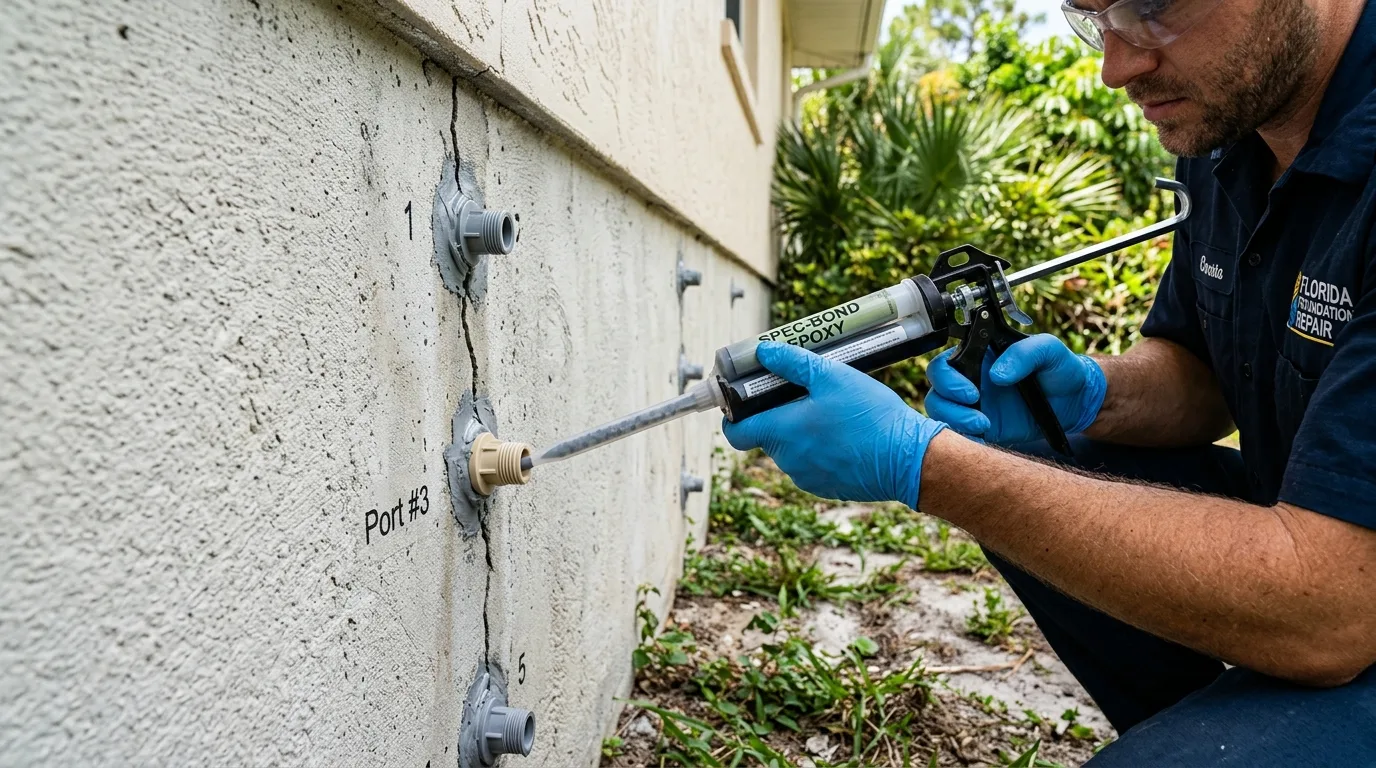
Concrete slabs are the foundation of almost everything built in South Florida — from homes and garages to sheds, screen enclosures, pool equipment pads, and workshop floors. In Broward County, the combination of unique soil conditions, strict permit requirements, and a climate that challenges concrete from the day it’s poured means that slab work demands careful planning and experienced execution. In this post, we’ll cover what makes Broward County slab work different, the types of slabs used in residential construction, the permit process, how to recognize foundation problems when they appear, repair options and their costs, and what drives costs on these projects.
Call +1(888)376-0955 to schedule a free estimate for slab or foundation work in Wilton Manors, Fort Lauderdale, or anywhere in Broward County.
Why Slabs and Foundations Matter for Wilton Manors Homeowners
Broward County sits on the Atlantic Coastal Ridge with oolitic limestone bedrock overlaid by sandy fill. Sandy soils drain rapidly but have poor load-bearing without proper compaction; oolitic limestone near surface can create uneven settlement. South Florida’s hot-humid climate — wet season (June–September) with daily thunderstorms and hurricane risk, dry season (November–April) 50–85°F — means concrete curing and work scheduling are significantly affected. Salt air from the Atlantic accelerates corrosion of uncoated metal reinforcement; UV radiation degrades unsealed concrete surfaces faster than in northern climates.
The sandy fill layer present across much of Wilton Manors and the surrounding area requires thorough mechanical compaction before any slab is poured. Where oolitic limestone sits close to the surface, slabs can settle unevenly if soil prep ignores these transitions. Salt air and ground moisture mean that any reinforcement steel must be properly coated and placed with adequate concrete cover — a detail that separates professional work from shortcuts.
What Makes Florida Foundations Different
Sandy, loosely compacted soils
Much of South Florida, including Broward County and Wilton Manors, sits on sand and sandy loam soils with low bearing capacity. When these soils aren’t properly compacted during construction — or when they become saturated — foundations can settle unevenly.
High water table
The water table in South Florida is extremely shallow — in some areas only 2–5 feet below grade. This creates hydrostatic pressure against foundation walls and slabs, and it means that drainage must be carefully managed around all foundations.
Limestone karst and sinkholes
South Florida’s geology includes porous limestone (karst) formations that can dissolve over time, creating voids beneath foundations. While true sinkholes are more common in central Florida, they do occur in Broward County and warrant awareness.
Organic soils
Some areas of Broward County have organic soil (muck) pockets that compress over time as they lose moisture, causing foundation settlement. These areas often require special foundation engineering.
Types of Concrete Slabs Used in Broward County
Monolithic slabs are poured in a single continuous pour, combining the slab floor and perimeter footings into one structural element. This is the most common foundation type in South Florida residential construction. It minimizes the number of construction phases and reduces the number of seams where moisture can penetrate.
Floating slabs (also called independent or isolated slabs) are poured separately from any footing or wall system. These are common for accessory structures: sheds, detached garages, screen enclosures, generator pads, and pool equipment pads. They sit on compacted fill and are designed to move slightly with the soil without transferring stress to an attached structure.
Post-tension slabs use high-strength steel cables tensioned after the concrete cures to create internal compression that resists cracking. These are common in new residential construction throughout Broward County and offer superior performance in areas where soil conditions create differential settlement risk.
Thickened-edge slabs feature a deeper concrete section around the perimeter that acts as an integrated footing. The Broward County code requires pool deck and screen patio edges to have 8×8 inch footings with continuous #5 bar — a thickened-edge approach that provides the load capacity needed for screen enclosure and pool cage attachment points.
Accessory structure pads are smaller isolated slabs for equipment, storage buildings under the permit threshold, or utility connections. These still require a minimum 4-inch thickness on compacted base per Broward County standards.
Practical Uses for Slab Work in Broward County
- Residential home foundations: Monolithic slabs are the standard foundation system for new home construction and additions throughout the county.
- Garage floor replacement: Existing garage slabs crack and settle over time; full replacement with a properly compacted sub-base is often the correct solution.
- Screen enclosure and pool cage pads: Broward County’s requirement for 8×8 inch footings with continuous #5 bar applies at all attachment points for these structures.
- Generator and equipment pads: Concrete pads for standby generators, AC condensers, and pool equipment provide level, stable, durable support that won’t shift or settle.
- Workshop and hobby space floors: Detached workshops and hobby buildings need slabs that can handle heavy tool loads — thicker sections and reinforcement are common here.
- ADU and in-law suite foundations: Accessory dwelling unit construction in Broward County always begins with a properly permitted concrete slab.
The Slab Installation Process
Every slab project in Broward County begins with permitting. Broward County requires permits for driveways and concrete slabs. Two complete plan sets with a Registered Land Surveyor’s Certificate are required for most slab work. Plan review takes up to 15 business days. For projects $5,000 and above, a Notice of Commencement must be filed with Broward County Records prior to the first inspection. Permits can be applied for online through broward.org/building.
Once permits are approved, the site is laid out, graded, and excavated to the required depth. Fill is placed and mechanically compacted in lifts — typically 6-inch layers — to achieve the density required for a stable slab base. In areas where oolitic limestone is near the surface, the contractor will assess whether additional preparation is needed to create a uniform bearing surface.
Forms are set to define the slab perimeter and any interior thickened sections. Reinforcement steel is placed — rebar or wire mesh for standard slabs, post-tension cables for post-tension systems — and chairs are used to maintain the correct cover distance so concrete fully encapsulates the steel and protects it from chloride intrusion.
Concrete is poured, consolidated with a vibrator, screeded flat, and finished. Control joints are tooled or saw-cut to manage shrinkage cracking. In South Florida’s wet season, pour scheduling is critical — afternoon thunderstorms can compromise fresh concrete surfaces if the pour isn’t timed correctly. The dry season (November through April) is the preferred window for major slab pours.
Curing takes a minimum of 7 days before light foot traffic and 28 days for full structural strength. A final county inspection closes the permit.
Questions about your slab project timeline or permit requirements? Call +1(888)376-0955 — our team handles Broward County permitting from start to finish.
Recognizing Foundation Problems
Catching foundation issues early saves significant money. Watch for these signs:
Exterior warning signs:
- Diagonal cracks at corners of windows and doors — especially in stucco
- Horizontal cracks in block foundation walls — indicate lateral pressure
- Separation between the foundation and attached structures (porch, addition)
- Gaps between the slab and attached steps or stoops
- Standing water persistently near foundation after rain
Interior warning signs:
- Doors or windows sticking or not closing properly — one of the earliest signs
- Diagonal cracks in drywall, especially at door and window corners
- Sloping or bouncy floors — indicates slab movement or wood floor issues
- Cracks in tile or grout lines
- Gaps between walls and ceilings or floors
Critical warning signs requiring immediate professional evaluation:
- Horizontal cracks in foundation walls (severe lateral pressure)
- Cracks wider than 1/4 inch with displacement
- Visible settling or tilting of any part of the structure
- Multiple large cracks appearing simultaneously
Common Foundation Problems and Repairs
Slab settlement is the most common foundation issue in Florida — portions of the concrete slab sinking due to subgrade compaction, erosion, or soil movement. Signs include uneven floors, doors and windows binding, and cracks in slab-to-wall connections. Treatment options include slab leveling (mudjacking or polyurethane foam injection), partial slab replacement, or underpinning for severe cases.
Perimeter foundation cracking in Florida’s block or poured concrete stem walls can indicate soil settlement, hydrostatic pressure, poor initial construction, or root intrusion — especially in older Broward County neighborhoods with mature trees.
Moisture intrusion from the high water table and heavy Florida rainfall degrades concrete foundations over time. Efflorescence (white mineral deposits) on basement or stem wall surfaces is an early indicator.
Root damage is particularly relevant in Wilton Manors’ mature, tree-lined neighborhoods. Tree roots from aggressive species can crack and lift foundation elements.
Foundation repair options and costs
- Slab leveling (mudjacking or foam injection): Polyurethane foam or cement slurry is injected beneath a sunken slab, lifting it back to level. Faster, less invasive, and less expensive than full slab replacement. Cost: $1,500–$8,000 depending on area and extent of sinking.
- Crack repair and waterproofing: Epoxy injection, hydraulic cement, and exterior waterproofing membranes address non-structural cracks and moisture intrusion. Cost: $500–$5,000 depending on scope.
- Underpinning (push piers or helical piers): Steel push piers or helical piers are driven to bedrock to stabilize and potentially lift the foundation. Most comprehensive solution for serious settlement issues. Cost: $1,000–$3,000 per pier; most projects require 8–15 piers ($8,000–$45,000).
- Full foundation replacement: Required in severe cases. Significant structural project requiring engineering oversight and permits. Cost: typically $20,000–$100,000+ for major work.
When to call a structural engineer
A licensed structural engineer (PE in Florida) should evaluate any foundation issues that involve horizontal wall cracks, visible structural movement, multiple large cracks appearing over a short period, visible settlement more than 1 inch, or any situation where you’re uncertain about the cause. Never rely solely on a contractor’s diagnosis for serious structural concerns — get an independent engineer’s opinion.
Foundation Maintenance
Preventing foundation problems is far less expensive than repairing them:
- Maintain proper drainage — ensure gutters direct water away from the foundation
- Control vegetation — keep aggressive trees and shrubs a safe distance from the foundation
- Monitor moisture — address persistent wet areas near the foundation promptly
- Annual inspection — walk the perimeter annually looking for new cracks or changes
- Seal exposed concrete — proper sealing protects foundation concrete from moisture
Cost Factors for New Slab Work
Standard concrete slab installation in Broward County runs $3.94–$7.87 per square foot, consistent with driveway installation pricing. Factors that push costs higher include: additional reinforcement requirements (post-tension, heavy rebar grids), thickened-edge or footing integration, difficult access for concrete trucks, poor existing soil conditions requiring deeper excavation and additional fill, and any drainage improvements needed to protect the finished slab.
Projects above $5,000 trigger the Notice of Commencement requirement, which adds a small recording fee but is a straightforward step a licensed contractor handles as part of the project. Permit fees vary by municipality and project scope. Attempting slab work without permits in Broward County creates significant liability — unpermitted slabs can complicate property sales and insurance claims, and Broward County does enforce unpermitted work violations.
FAQs
Does every concrete slab in Broward County require a permit?
Yes. Broward County requires permits for concrete slabs and driveways. The permit requirement applies regardless of slab size for most structural applications. Small isolated pads below certain square footage thresholds may be exempt in some municipalities — confirm with your contractor before assuming no permit is needed.
What is the minimum concrete thickness for a slab in Broward County?
The minimum is 4 inches on compacted sand or crushed rock. Pool deck and screen patio edges require 8×8 inch footings with continuous #5 bar. Structural slabs for occupied buildings will have additional requirements specified in the engineering documents.
How long does a concrete slab last in South Florida?
A properly installed and maintained slab can last 30 to 50 years in South Florida conditions. The key variables are base preparation, concrete mix design, reinforcement placement and protection, drainage, and regular sealing. Slabs poured on poorly compacted fill or without adequate chloride protection have significantly shorter service lives.
Planning a slab or foundation project in Broward County? Call +1(888)376-0955 or request a free estimate online. We serve Wilton Manors, Fort Lauderdale, and the surrounding area.
Related posts: