
How to Protect Concrete from South Florida's Heat, Salt Air, and Rain
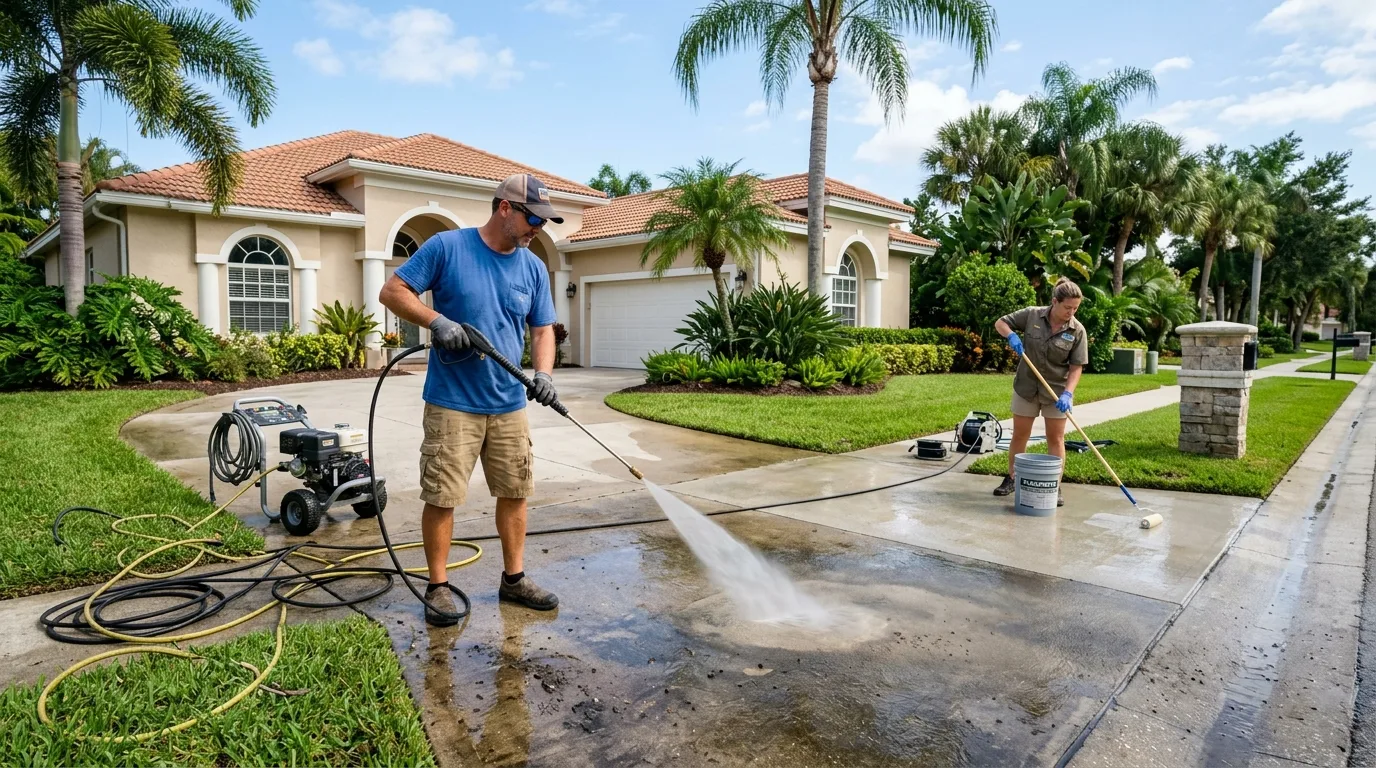
Concrete is tough, but South Florida tests it harder than almost anywhere else in the country. Between the relentless UV radiation, salt-laden air blowing in from the Atlantic, and a wet season that brings daily afternoon thunderstorms, unprotected concrete in Wilton Manors and Broward County deteriorates faster than homeowners expect. In this post, we’ll cover why the local climate accelerates concrete wear, the most important maintenance steps you can take, a seasonal maintenance calendar, cleaning methods, resealing schedules, and how to know when repair is the right call.
Call +1(888)376-0955 to schedule a free estimate — our team serves Wilton Manors, Fort Lauderdale, and all of Broward County.
Why Concrete Maintenance Matters for Wilton Manors Homeowners
Broward County sits on the Atlantic Coastal Ridge with oolitic limestone bedrock overlaid by sandy fill. Sandy soils drain rapidly but have poor load-bearing without proper compaction; oolitic limestone near surface can create uneven settlement. South Florida’s hot-humid climate — wet season (June–September) with daily thunderstorms and hurricane risk, dry season (November–April) 50–85°F — means concrete curing and work scheduling are significantly affected. Salt air from the Atlantic accelerates corrosion of uncoated metal reinforcement; UV radiation degrades unsealed concrete surfaces faster than in northern climates.
That combination — salt air attacking rebar from the outside, UV breaking down the surface paste, and wet-season moisture cycles opening microcracks — creates a compounding degradation problem. The result is spalling, rust staining, and structural cracking that show up in as little as five to ten years on neglected surfaces. A consistent maintenance routine is far cheaper than replacement.
Types of Concrete Damage Seen in South Florida
UV surface degradation is the most visible early sign. South Florida’s intense year-round sun breaks down the cement paste at the surface, leaving behind a chalky, porous layer. Once that surface paste is gone, the concrete absorbs moisture and contaminants freely.
Salt air and chloride intrusion affect any concrete within several miles of the coast — which includes virtually all of Broward County. Chlorides penetrate unsealed concrete and reach the steel reinforcement inside, causing rust expansion that fractures the slab from within. This is the primary driver of spalling on driveways, pool decks, and walkways.
Wet-season saturation and drying cycles cause concrete to expand and contract repeatedly. Sandy fill soils beneath slabs can shift during heavy rains, undermining support and accelerating cracking. Slabs poured without adequate drainage accommodation are especially vulnerable.
Tree root intrusion is common in residential neighborhoods. Wilton Manors has significant tree canopy, and aggressive root systems can lift and crack sidewalks, driveways, and patio slabs with little warning.
Surface staining from mildew, algae, oil, and rust is not just cosmetic — algae growth retains moisture and accelerates surface erosion over time.
Annual Concrete Maintenance Calendar for South Florida
Spring (March–May): Inspection and Preparation
Before rainy season begins, complete these tasks:
- Full visual inspection — walk all concrete surfaces and document any new cracks, chips, or surface deterioration
- Assess sealer condition — pour water on the surface; if it soaks in rather than beading, it’s time to reseal
- Tree root check — look for any new lifting or cracking near tree roots
- Joint inspection — verify expansion joints are intact and properly sealed
- Clean surface — remove winter debris and prepare for inspection
If you see significant deterioration, address it before rainy season makes it worse. Small cracks filled in spring prevent big problems by fall.
Summer (June–September): Rainy Season Management
Florida’s rainy season is when most concrete problems develop or accelerate.
During heavy rain events:
- Check drainage around all concrete — water should drain away from slabs, not pool
- Look for washout beneath slab edges after storms
- Monitor any existing cracks for widening
Between rain events:
- Algae and mold can grow quickly on damp concrete surfaces
- Apply mildewcide cleaner if biological growth appears
- Keep gutters clear to prevent concentrated water discharge onto concrete
Fall (October–November): Cleaning and Sealing Season
Fall is ideal for major concrete maintenance in South Florida — rainy season has ended, temperatures are mild, and dry weather facilitates proper sealing.
- Pressure washing — thorough cleaning of all concrete surfaces
- Stain treatment — address oil, rust, or other stains
- Crack repair — fill and seal any cracks before they worsen
- Resealing — apply fresh sealer if due (see schedule below)
Winter (December–February): Lower Maintenance, Higher Attention
South Florida’s dry season generally means lower maintenance demands. However:
- Salt air is more prevalent in winter with stronger offshore winds
- Holiday gatherings increase foot traffic on driveways and patios
- Inspect after any storm events
Practical Maintenance Steps
- Seal every two to three years: A penetrating silane-siloxane sealer or high-quality acrylic sealer blocks chloride and moisture intrusion and is the single highest-value maintenance action you can take. See our concrete sealing guide for sealer types, costs, and the full sealing process.
- Clean surfaces annually: Pressure washing removes algae, mildew, and dirt that hold moisture against the surface. Use a low-pressure setting on sealed surfaces to avoid stripping the sealer.
- Fill cracks immediately: Small hairline cracks grow into structural cracks when water infiltrates and salt deposits expand inside them. Polyurethane or epoxy crack fillers stop the progression.
- Improve drainage: Grade landscaping away from slabs and keep downspouts directed well away from concrete edges to reduce wet-season saturation.
- Inspect after hurricane season: October and November are ideal times to walk your concrete surfaces and document new cracks, spalling, or displacement before planning any repairs.
- Address rust stains early: Surface rust staining indicates chloride has already reached reinforcement. Treat the stain and have the area evaluated by a concrete professional.
Cleaning Concrete in South Florida
Pressure washing
Annual pressure washing is the cornerstone of South Florida concrete maintenance. Use:
- 3,000 PSI pressure washer maximum for most surfaces
- 25-degree nozzle for general cleaning
- 40-degree nozzle for delicate surfaces (older concrete, fresh sealer)
- Work in the direction of the concrete’s texture (broom or stamp pattern)
High-pressure washing can damage unsealed or weakly sealed concrete. If you’re not sure, test in an inconspicuous area first.
Cleaning products for Florida conditions
- Mold and algae (very common in Florida): Use a concrete mold cleaner or a diluted sodium hypochlorite solution (1 part bleach to 10 parts water). Let dwell 15 minutes, then rinse. Avoid full-strength bleach — it can degrade sealers and damage adjacent vegetation.
- Oil stains: Concrete degreaser applied immediately gives the best results. For set-in stains, try poultice-style treatments or commercial oil stain removers.
- Efflorescence (white mineral deposits): Use an efflorescence cleaner (diluted muriatic acid or commercial product). Always test in a small area first and follow manufacturer safety guidelines.
- Rust stains: Oxalic acid-based cleaners work well for rust removal without damaging the concrete.
Sealing Schedule for South Florida Concrete
Regular sealing is the single most important maintenance task for South Florida concrete. Quick reference schedule:
| Application | Recommended Interval |
|---|---|
| Standard driveway | Every 2–3 years |
| Stamped/decorative concrete | Every 1–2 years |
| Pool deck | Every 1–2 years |
| Patios | Every 2–3 years |
| Sidewalks | Every 3–5 years |
Always seal after cleaning and ensuring the surface is completely dry — in South Florida, allow 48–72 hours of dry weather before applying sealer.
The Maintenance Process: What a Typical Visit Looks Like
A thorough concrete maintenance visit from a qualified Broward County contractor starts with a surface inspection — identifying active cracks, delaminated areas, staining, and drainage issues. Minor cracks are cleaned, dried, and filled with an appropriate filler matched to crack width and depth. Larger or structural cracks require saw-cutting, cleaning, and a rigid filler or mortar repair before sealing.
Once repairs are complete, the surface is cleaned by pressure washing and allowed to dry fully — a critical step because sealer applied over moisture will trap water beneath and bubble. In South Florida, drying time is best achieved during the dry season, when humidity and temperature cooperate. Sealer is then applied in one or two coats by roller or sprayer, depending on the product.
The full process for a standard residential driveway typically takes one to two days: repair and cleaning on day one, sealer application on day two after overnight drying.
Ready to get your concrete assessed before the wet season? Call +1(888)376-0955 for a free estimate from our Wilton Manors team.
Cost Factors
Concrete repair in Broward County runs $6.50–$14.00 per square foot depending on damage severity, while basic sealing costs significantly less. A standard two-car driveway seal and minor crack repair package typically falls in the $400–$900 range, varying with the size of the surface, extent of cracking, and sealer type selected. Decorative or stamped concrete surfaces require specialized sealers and add to material costs.
Deferring maintenance always costs more. A driveway that needs sealing and minor crack fill today may need full-panel replacement — at $3.94–$7.87 per square foot for new installation — within a few years if left untreated. Catching damage early is the single best way to keep concrete maintenance affordable.
When Maintenance Isn’t Enough
Sometimes concrete reaches a condition where maintenance isn’t cost-effective. Signs that replacement makes more sense than continued maintenance:
- Resealing is required more frequently than every 12 months
- Crack repairs keep reopening in the same locations
- Surface is rough and impossible to fully clean
- Multiple large areas of delamination or spalling
Get a professional assessment before investing more in maintenance on a surface that needs replacement. See our concrete repair guide for details on repair options, costs, and when full replacement becomes the better investment.
FAQs
How often should I seal concrete in South Florida?
Every two to three years for most residential surfaces. Pool decks and driveways with heavy traffic or direct sun exposure may benefit from resealing every two years. Inspect the surface annually — if water no longer beads on the surface, the sealer has worn through and it’s time to reseal.
Can I seal concrete myself?
Consumer-grade sealers are available at home improvement stores, but they vary widely in quality and penetration depth. Professional-grade penetrating sealers offer better chloride resistance and longer service life. If your concrete has active cracks, spalling, or delamination, those issues must be addressed before sealing — applying sealer over damaged concrete traps problems underneath.
Is there a best time of year to seal concrete in Broward County?
Yes. The dry season — November through April — offers ideal conditions: lower humidity, moderate temperatures, and minimal rain. Sealer applied during the wet season risks moisture contamination during application and insufficient drying time between rain events.
Protect your investment before the next wet season arrives. Call +1(888)376-0955 or request a free estimate online. Our team serves Wilton Manors, Fort Lauderdale, and all of Broward County.
Related posts: