
Stamped Concrete Patios: Design Ideas and Costs for Wilton Manors Homes
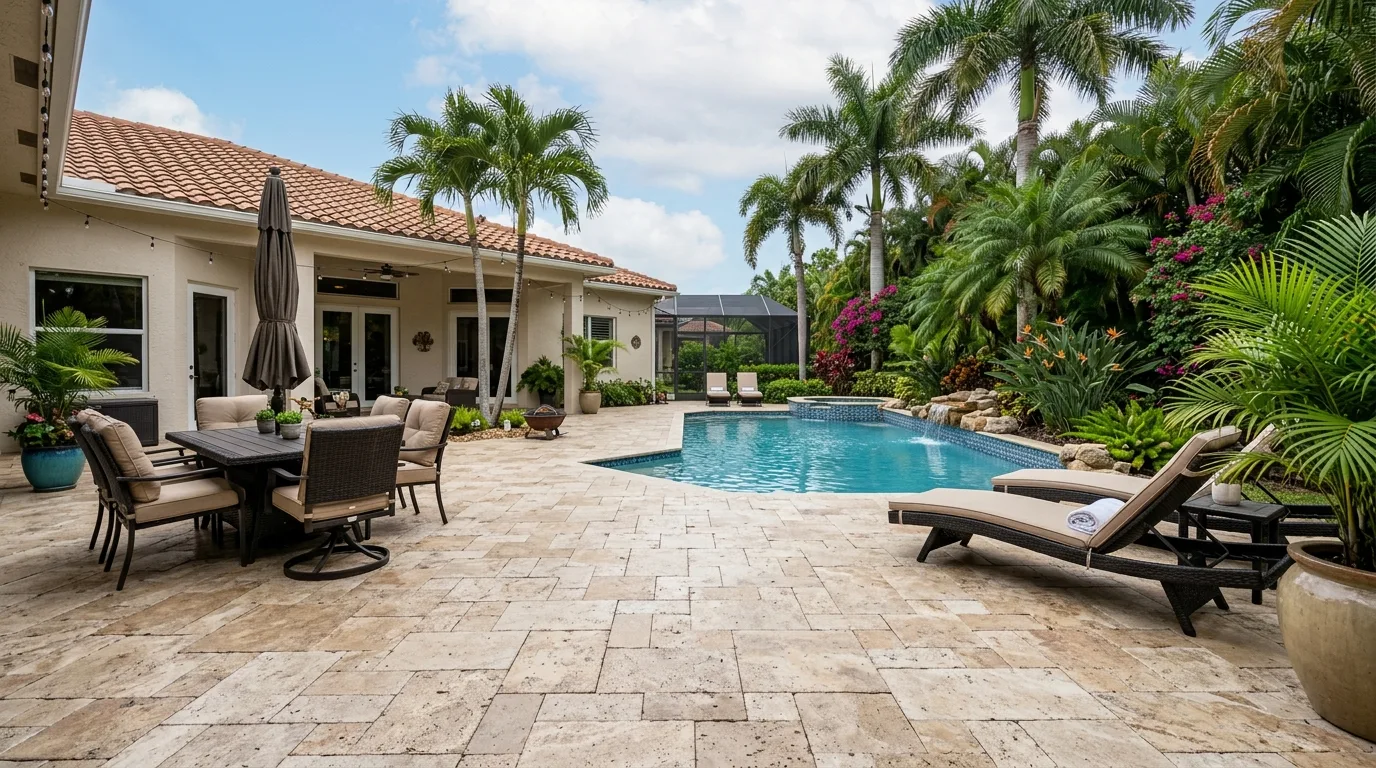
A stamped concrete patio transforms an ordinary backyard into an outdoor living space that’s functional, attractive, and built to handle South Florida’s demanding climate. For Wilton Manors homeowners, the combination of year-round outdoor living weather and the need for materials that can withstand humidity, UV exposure, and heavy rain makes stamped concrete a particularly smart investment. In this post, we’ll cover what stamped concrete is, the most popular pattern and color options, the full installation process, what drives cost in Broward County, common mistakes to avoid, and how to maintain your patio for decades of use.
Call +1(888)376-0955 for a free stamped concrete patio estimate in Wilton Manors and surrounding areas.
What Is Stamped Concrete?
Stamped concrete is regular concrete that has been imprinted with patterns and sometimes colored to resemble brick, slate, flagstone, cobblestone, wood, or other materials. The result is a highly customizable surface that costs significantly less than the natural materials it mimics. In South Florida, stamped concrete is especially popular for pool decks and surrounds, backyard patios, front entry walkways, driveways, and commercial plazas and entryways.
Why Stamped Concrete Works So Well for Wilton Manors Homes
Heat resistance
South Florida’s intense sun and heat are hard on outdoor surfaces. Stamped concrete — especially when finished with a light-colored or integral-pigment sealer — reflects more heat than dark asphalt or unfinished concrete. This is critical for pool decks where bare feet contact the surface.
Rain durability
Broward County receives over 60 inches of rainfall annually. Properly installed stamped concrete with adequate drainage slopes handles this without issue. The sealed surface resists water penetration, reducing the risk of cracking during wet/dry cycles.
Salt air resistance
For homeowners near the Intracoastal Waterway or the ocean, salt air corrosion is a real concern. A quality penetrating sealer on stamped concrete provides excellent protection against salt air degradation.
Low maintenance
Once installed and sealed, stamped concrete requires minimal maintenance — just occasional cleaning and resealing every 2–3 years. Compare this to natural pavers, which shift, weed, and require periodic releveling.
Stamped Concrete Pattern and Color Options
Ashlar slate is one of the most popular patterns in South Florida. The irregular rectangular layout mimics the look of cut stone and works well with both modern and Mediterranean-style homes, which are common in Wilton Manors. The textured surface also provides excellent traction when wet.
Flagstone delivers the organic look of natural flagstone, perennially popular in South Florida’s tropical aesthetic. Irregular flagstone patterns work beautifully for patios and can be combined with accent bands or borders for a custom look.
Cobblestone and European fan patterns evoke Old World character and pair well with the tropical landscaping styles common throughout Broward County. These patterns are slightly more labor-intensive to stamp correctly, which can push pricing toward the upper end of the decorative range.
Wood plank stamped concrete has surged in popularity as homeowners seek the warmth of wood without the maintenance demands. In Florida’s humidity, actual wood decking requires constant upkeep to prevent rot and warping. A stamped concrete plank finish delivers the same visual effect with none of the ongoing maintenance headaches.
Travertine pattern is ideally suited for pool decks and patios in Wilton Manors because it replicates the high-end look of real travertine tile at a fraction of the cost and without the grout lines that trap algae and mold in humid climates.
Herringbone brick works well for walkways, driveways, and formal garden areas. The herringbone orientation adds visual interest and is a perennial favorite in Wilton Manors and the surrounding communities.
Color hardeners and release agents give stamped concrete its depth and realism. Color hardeners are broadcast into the surface and troweled in, creating a durable base tone. Release agents applied over the stamps add a contrasting color that highlights the pattern’s recessed areas, mimicking the variation of natural stone. The result can range from a single-tone subtle look to a richly variegated finish that’s hard to distinguish from the real thing.
Practical Uses for Stamped Concrete Patios
- Rear entertaining areas: The most common application — creating a defined outdoor dining and lounging space that connects seamlessly with interior flooring through sliding glass doors.
- Pool surrounds: Stamped concrete is an excellent pool deck material; see our dedicated post on pool deck concrete in Wilton Manors for specifics.
- Front entry and walkways: A stamped walkway and front stoop creates strong curb appeal without the cost of a full driveway replacement.
- Side yard paths: Narrow stamped bands connecting the front and rear yards are both functional and visually cohesive.
- Outdoor kitchen platforms: Stamped concrete provides the level, durable base that outdoor kitchens require while tying the cooking area into the broader patio design.
How the Stamped Concrete Installation Process Works
Stamped concrete installation is more involved than a standard broom-finish pour, and the timing is critical. The sequence:
1. Site preparation. The area is excavated, graded, and compacted. In South Florida’s sandy soils, proper base compaction is critical. The ground must be properly graded for drainage, with a gravel base where required.
2. Form setting. Wooden or metal forms define the edges of the patio. This is where curves, borders, and special shapes are established.
3. Pouring. A higher-strength mix (3,000–4,000 PSI, with 4,000+ recommended for South Florida conditions) is poured and screeded level.
4. Color application. Color hardener is broadcast into the surface and worked in. Integral color can be mixed directly into the concrete for a base tone; surface hardener is troweled in for additional depth. For the most natural look, a combination technique is used.
5. Stamping. Before the concrete reaches its final set, the stamping process begins — pressing pattern mats into the surface. Experienced contractors time this window precisely; the concrete must be firm enough to hold the impression but not so stiff that it resists the stamp. The window is typically only 30–60 minutes in Florida’s heat. Pour too early and the stamps sink unevenly; pour too late and the pattern won’t register cleanly.
6. Curing. After stamping, the slab is allowed to cure for 24 hours before any foot traffic.
7. Sealing. A sealer — either a solvent-based acrylic or a water-based polyurethane — is applied once the surface has fully cured, typically 7–14 days after the pour. We recommend a penetrating sealer plus a surface sealer for South Florida conditions. For decorative concrete work throughout Wilton Manors, proper sealing is the step that separates a lasting installation from one that fades and chips within a few years.
Planning a patio project? Call +1(888)376-0955 to schedule a free on-site consultation.
Cost Factors for Stamped Concrete Patios in Broward County
Stamped and decorative concrete in Broward County runs $14–$28 per square foot installed (2025 pricing). Standard concrete starts at $3.94–$7.87 per square foot, so you’re paying a premium for the decorative work — but you’re getting a surface that rivals natural stone at roughly half the material cost of tile or travertine installation.
A more granular pricing breakdown:
| Service | Cost per Sq Ft |
|---|---|
| Basic stamped (single pattern, no color) | $10–$14 |
| Single color + single pattern | $12–$16 |
| Multi-color / multi-pattern | $16–$22 |
| Premium with border treatments | $18–$25+ |
For a typical 400 sq ft patio, budget $4,000–$10,000 depending on complexity.
Several variables will move your project toward the lower or upper end of the range:
- Pattern complexity — Simple single-stamp patterns like ashlar slate cost less than multi-stamp patterns like cobblestone fans, which require more labor and precision during placement.
- Number of colors — A single base color with one release agent is standard. Adding a second or third accent color for a more variegated look adds labor and material cost.
- Site preparation — If your yard needs significant grading, fill, or drainage work before the slab can be poured, expect additional costs. South Florida’s flat terrain occasionally presents drainage challenges that need to be addressed at the subbase stage.
- Borders and insets — Decorative cut borders, contrasting color bands, or tile insets embedded into the concrete add visual interest but also add labor cost.
- Sealing and resealing — Budget for sealer application at installation and plan to reseal every 2–3 years to maintain appearance and protection. Annual resealing is advisable in high-traffic areas or spots with full sun exposure.
Common Stamped Concrete Mistakes to Avoid
- Skipping the sealer — unacceptable in South Florida’s UV environment
- Using too thin a slab — minimum 4 inches, 5 inches for driveways
- Pouring in direct afternoon sun — creates rapid moisture loss and surface defects
- Not accounting for drainage — critical in Florida’s rainy season
Frequently Asked Questions
How long does stamped concrete last in South Florida?
A properly installed and sealed stamped concrete patio will last 20–30 years in South Florida’s climate. The key to longevity is consistent resealing (every 2–3 years) to maintain the UV and moisture barrier, and prompt repair of any hairline cracks before water intrusion occurs.
Can stamped concrete be slippery when wet?
Plain stamped concrete can be slippery when wet. This is why most Wilton Manors installations use an anti-slip additive in the sealer, or choose patterns with deeper texture profiles that provide additional grip. If the patio will be adjacent to a pool, an anti-slip finish is strongly recommended.
Can existing concrete be stamped?
No — stamping must be done while the concrete is still in a plastic (uncured) state. Existing concrete cannot be stamped after the fact. However, decorative overlays can be applied to existing slabs to achieve a similar textured appearance, though the durability and warranty differ from a full stamped installation.
A stamped concrete patio is one of the most rewarding outdoor improvements a Wilton Manors homeowner can make. Done right, it delivers decades of beauty, function, and low maintenance in a climate that challenges lesser materials. Our team handles everything from design consultation and permitting to pour, stamp, and final sealing.
Call +1(888)376-0955 or contact us online for a free estimate. We serve Wilton Manors, Fort Lauderdale, Oakland Park, and all of Broward County.
Related Posts: