
Decorative Concrete Options for Wilton Manors Homes
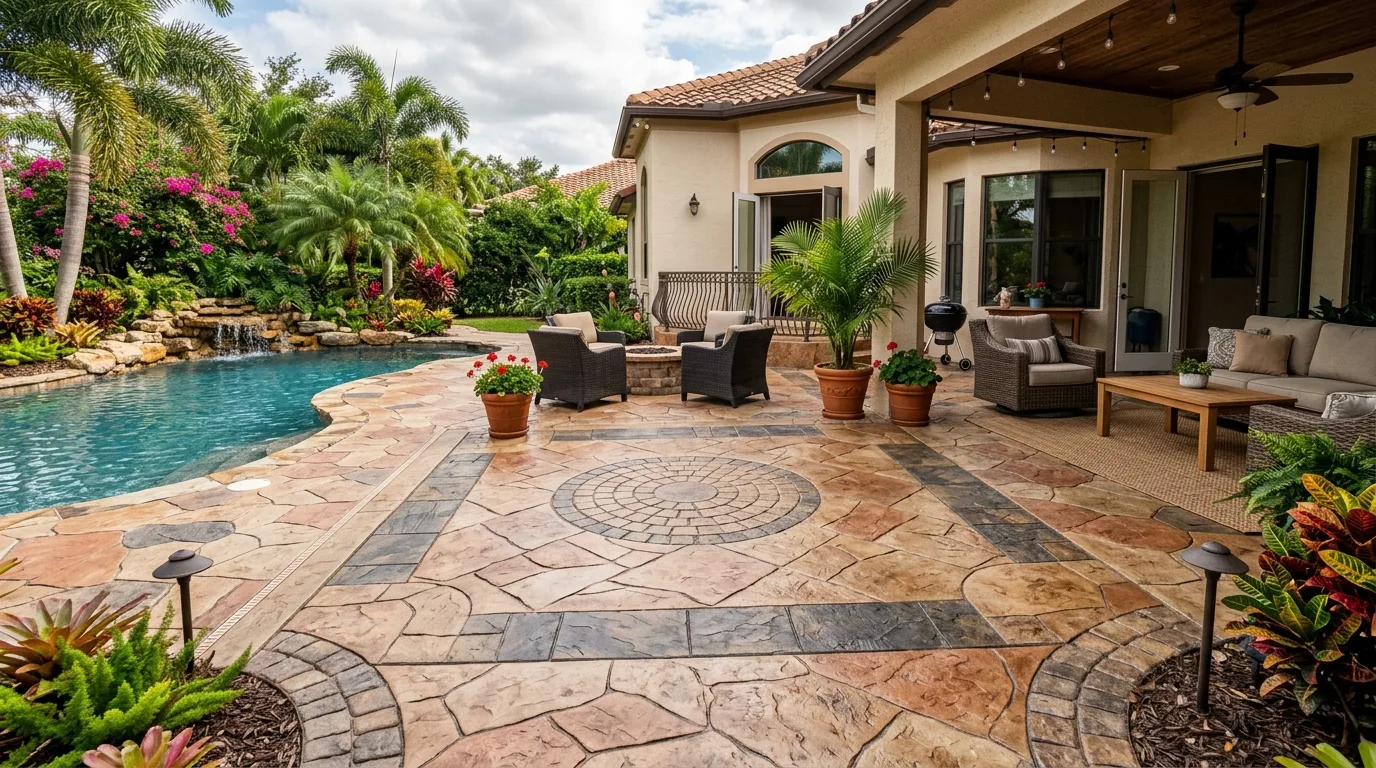
Plain gray concrete does the job, but decorative concrete does it beautifully. For Wilton Manors homeowners looking to upgrade a driveway, patio, pool deck, or walkway, the range of decorative concrete finishes available today rivals natural stone and pavers in visual impact — at a price point that makes real stone a hard sell. Whether you’re drawn to the warmth of a wood-look plank, the elegance of travertine-patterned pool coping, or the rich depth of an acid-stained patio floor, there’s a decorative concrete system designed for it. In this post, we’ll cover the most popular decorative concrete options in Wilton Manors, seven specific design ideas to inspire your project, how each performs in South Florida’s climate, and what you can expect to invest.
Call +1(888)376-0955 for a free decorative concrete consultation and estimate in Wilton Manors and Broward County.
Why Decorative Concrete Works for Wilton Manors Homeowners
Broward County sits on the Atlantic Coastal Ridge with oolitic limestone bedrock overlaid by sandy fill. Sandy soils drain rapidly but have poor load-bearing without proper compaction; oolitic limestone near the surface can create uneven settlement. South Florida’s hot-humid climate — wet season (June–September) with daily afternoon thunderstorms and hurricane risk, dry season (November–April) with temperatures 50–85°F — means concrete curing and work scheduling are significantly affected. Salt air from the Atlantic accelerates corrosion of uncoated metal reinforcement, and UV radiation degrades unsealed concrete surfaces faster than in northern climates.
These conditions actually make the sealing component of decorative concrete a structural advantage rather than just an aesthetic choice. Every decorative concrete system — stamped, stained, exposed aggregate, or overlaid — requires a topcoat sealer to protect the color and texture. In Wilton Manors, that sealer is doing double duty: it’s protecting the visual finish and simultaneously creating the moisture barrier and UV block that the concrete surface needs to last. In effect, the decorative finish requirement forces the installation of the protective layer that South Florida concrete should have in the first place but often doesn’t on standard broom-finish slabs.
Wilton Manors also benefits from the outdoor-living premium in South Florida real estate. A well-executed decorative concrete patio, pool deck, or driveway contributes meaningfully to curb appeal and perceived property value — and in a market where outdoor space is priced at a premium, that’s a concrete return on investment.
Types of Decorative Concrete Options
Stamped concrete is the most versatile decorative option. Patterns are pressed into the concrete surface while it’s still in a plastic state, using rubber stamp mats that replicate the look of natural stone, brick, slate, cobblestone, tile, or wood. Color hardener adds a base tone throughout the surface, while release agent applied over the stamp pads highlights the recessed areas for depth and realism. Popular patterns in Wilton Manors include ashlar slate, travertine, European cobblestone, and wood plank. Stamped concrete runs $14–$28 per square foot in Broward County. For detailed design guidance, see our dedicated post on stamped concrete patios in Wilton Manors.
Exposed aggregate is created by washing the surface paste from fresh concrete before it fully hardens, revealing the decorative stone aggregate embedded in the mix. The result is a naturally textured, multi-tonal surface that’s slip-resistant and hides surface staining well. Exposed aggregate is a popular choice for pool decks and walkways in Wilton Manors because the texture provides natural grip and the varied surface color doesn’t show wear patterns as readily as uniform gray concrete. The aggregate selection — whether standard river pebbles, colored glass chips, or custom stone — allows for significant design customization. Local aggregates like crushed shells or coral-colored stones connect the design to South Florida’s coastal identity.
Acid staining transforms existing concrete into a variegated, marble-like surface using a reactive chemical solution that penetrates the concrete and creates permanent color through a chemical reaction with the lime in the mix. Because the color results from a reaction rather than a coating, acid stains are translucent and unique to each slab — no two acid-stained surfaces look exactly alike. Earth tones (amber, brown, terracotta, sage green) are the most common acid stain colors and suit South Florida’s tropical design aesthetic well. Acid staining is typically applied to existing concrete, making it an excellent option for updating a worn patio without full replacement.
Integral color is added to the concrete mix before the pour, producing a uniformly colored slab from aggregate to surface. Unlike topically applied color hardener, integral color won’t wear through to gray concrete beneath if the surface layer is damaged. Available in dozens of earth tones and custom colors, integral color is a cost-effective way to move beyond standard gray concrete. It pairs well with other decorative techniques — an integrally colored base with a contrasting stamped border, for example, is a popular design combination.
Concrete overlays and microtoppings are thin-profile polymer-modified cementitious systems applied over existing concrete slabs to restore or completely transform their appearance. Overlays range from 1/4-inch skim coats to 3/4-inch full overlays; microtoppings can be as thin as 1/16 inch. These systems are ideal for homeowners who want a decorative finish upgrade without the cost and disruption of demolition and replacement. They can be stamped, stained, textured, or finished smooth, and they bond reliably to clean, sound concrete.
Epoxy coatings are a popular choice for garage floors and utility areas. A full broadcast epoxy system — primer, base coat, decorative flake broadcast, and clear topcoat — transforms a dull gray garage slab into a durable, attractive surface that’s easy to clean and resistant to oil, chemical, and abrasion damage. The metallic and flake options available in modern epoxy systems have expanded far beyond the utilitarian finishes of earlier generations.
Seven Decorative Concrete Ideas for Wilton Manors Homes
1. Tropical flagstone-stamped patio
Nothing says “South Florida living” quite like a patio that looks like natural flagstone but performs like concrete. Flagstone stamping creates an organic, tropical feel that pairs beautifully with palm trees, tropical landscaping, and the outdoor lifestyle Broward County homeowners enjoy. The irregular flagstone pattern creates natural visual texture that hides minor surface variations over time, and combined with a UV-resistant sealer, this look stays vibrant despite intense Florida sun. Best for back patios, pool surrounds, and covered lanai extensions. Cost: $12–$18 per square foot.
2. Colored or acid-stained driveway
Transform a plain gray driveway into a design feature with integral color or acid staining. In Wilton Manors and the surrounding neighborhoods, earth tones — warm beiges, terracottas, and sandy hues — complement the tropical Florida landscape beautifully. Integral color is mixed directly into the concrete before pouring, providing consistent color throughout; acid staining is applied after the concrete cures and creates a mottled, variegated look reminiscent of marble or natural stone. Best for homeowners wanting curb appeal enhancement without the full cost of stamped concrete. Cost: $8–$14 per square foot for colored concrete; add $1–$3/sq ft for acid staining.
3. Travertine-look stamped pool deck
Pool decks are one of the most impactful decorative concrete applications in South Florida. Travertine-look stamped concrete mimics the high-end natural stone without the cost, weight, or installation complexity — and without travertine’s tendency to become slippery when wet. Choose a lighter color palette to reflect heat, and specify a broom finish or light texture overlay on top of the stamp pattern for pool safety compliance. See our guide on concrete pool decks in Wilton Manors for detailed specs. Cost: $14–$22 per square foot.
4. Exposed aggregate walkways
Exposed aggregate concrete is a timeless choice for walkways, garden paths, and entry areas. By exposing the natural aggregate (stones, shells, or specialty aggregates) within the concrete, you get a textured surface with natural visual appeal. These surfaces are naturally slip-resistant and drain well during Florida’s heavy rain events. Best for entry walkways, garden paths, pool surrounds, and utility areas. Cost: $8–$14 per square foot.
5. Microtopping or overlay on existing concrete
If your existing concrete is structurally sound but looking tired, a microtopping or concrete overlay can completely transform the surface without full replacement. This is one of the most cost-effective decorative options available. It can hide surface stains, discoloration, and minor cracks; apply stamped patterns to existing slabs; change the color dramatically; and add texture for slip resistance. This approach is often worth considering before deciding on full replacement. Cost: $3–$7 per square foot (fraction of full replacement).
6. Cobblestone-pattern driveway with border
A cobblestone-stamped driveway with a contrasting border treatment creates a dramatic, upscale look that significantly boosts curb appeal. In Wilton Manors’ established neighborhoods, this style complements both older and modern home designs. Use two complementary colors — a main cobblestone color and a contrasting border color — to frame the driveway perimeter, create accent bands, or outline a central medallion design. Premium decorative driveways can add significant value to your property. Cost: $15–$22 per square foot.
7. Vertical concrete walls and planters
Decorative concrete isn’t limited to horizontal surfaces. Vertical stamped or textured concrete walls, raised planters, and retaining walls can create a cohesive outdoor design aesthetic that ties all your hardscaping elements together. Common applications include raised garden beds for tropical plants, privacy walls with stamped facing, pool equipment enclosures, entry pillars and gate posts, and retaining walls for landscaping. Properly reinforced concrete vertical elements withstand Florida’s wind loads (important in hurricane season), UV exposure, and the salt-air environment far better than wood or composite alternatives.
Practical Uses for Decorative Concrete
- Driveways: Stamped or colored concrete transforms the primary approach to your home into a design feature rather than a utility surface.
- Pool decks: Travertine-pattern stamped concrete and exposed aggregate are the two most popular decorative pool deck finishes in Wilton Manors. See our full post on pool deck concrete options for detailed guidance.
- Rear patios and outdoor living areas: Decorative concrete creates a defined, cohesive outdoor room that flows from interior flooring through sliding glass doors.
- Front entry walkways: A stamped or exposed aggregate walkway and stoop sets the design tone for the property from the street.
- Interior floors: Polished concrete and microtopping systems work inside the home as well, particularly in contemporary design styles popular in Wilton Manors renovations.
- Garage floors: Epoxy systems convert utility space into finished living-adjacent space.
How Decorative Concrete Installation Works
The installation process varies by system, but all decorative concrete work shares a critical principle: surface preparation is everything. For overlay and stain systems on existing concrete, the slab must be clean, sound, and free of sealers, oils, or bond-breaking contaminants. Any existing sealer must be mechanically removed. Active cracks must be addressed before overlay application. Shortcuts at this stage result in delamination and failure within months.
For new stamped or colored pours, the sequence follows standard concrete installation — subbase prep, forming, rebar placement, pour, finish — with decorative steps integrated at the appropriate timing window. Color hardener is broadcast before finishing; stamps are applied when the concrete reaches the right consistency; staining occurs after full cure; sealing is the final protective step.
The sealing step is where many South Florida installations fall short. UV-stable, pool-appropriate, or traffic-rated sealers should be selected based on the specific application. A standard acrylic driveway sealer is not appropriate for a pool deck; a pool deck sealer is not formulated for interior floor applications. Matching the sealer system to the use environment is essential for longevity in Broward County’s demanding climate.
Ready to explore decorative concrete options for your project? Call +1(888)376-0955 for a free consultation and design discussion.
Cost Factors for Decorative Concrete in Broward County
Decorative concrete in Broward County runs $14–$28 per square foot for stamped and decorative work, compared to $3.94–$7.87 per square foot for standard finishes (2025 pricing). Within the decorative range, several variables move the price:
- System type: Acid staining an existing slab is typically less expensive than a new stamped pour because it eliminates the concrete material and subbase prep costs. Overlays fall in the middle — less than a full pour, more than a simple stain.
- Pattern complexity: Single-stamp patterns are less labor-intensive than multi-stamp designs with borders and insets. The ashlar slate pattern is typically at the lower end of the stamped range; complex fan or medallion patterns with multiple color layers are at the upper end.
- Color work: A single base color with one release tone is standard pricing. Each additional color layer adds labor.
- Square footage: Larger projects benefit from some economy of scale on setup costs, but the per-square-foot labor cost doesn’t drop dramatically because decorative work is time-intensive throughout.
- Sealer quality: Premium UV-stable, commercial-grade sealers cost more than basic residential sealers but are worth the investment in South Florida’s UV intensity. Budget for resealing every 2–3 years as ongoing maintenance.
Choosing the Right Decorative Concrete Contractor
Not all concrete contractors have experience with decorative work. Stamping, staining, and overlays require specific skills, tools, and timing that standard concrete work does not. When evaluating contractors:
- Ask to see photos of completed decorative projects in South Florida
- Verify they have experience with Florida-specific sealers and finishes
- Confirm they pull proper Broward County permits
- Get detailed written proposals that specify mix design, stamp patterns, colors, and sealer products
Read our complete guide on questions to ask before hiring a concrete contractor in Florida before making a final decision.
Frequently Asked Questions
How durable is decorative concrete in South Florida’s climate?
Stamped and decorative concrete with proper sealing is highly durable in South Florida’s climate. The sealer is the key maintenance item — UV radiation and weather cycling degrade the sealer over time, and resealing every 2–3 years maintains the barrier that protects both the color and the concrete beneath. Acid stains and integral colors are permanent; they will not fade or peel. Surface-applied color hardeners are also durable but can show wear in very high traffic areas over many years.
Can decorative concrete be applied over my existing cracked slab?
Active or widening cracks present a challenge for overlay systems — the crack will eventually telegraph (re-appear) through the overlay unless it’s properly treated first. Cracks should be stabilized with epoxy injection or crack stitching before overlay application. A professional assessment will determine whether your existing slab is a good overlay candidate.
Is decorative concrete slippery when wet?
Plain stamped concrete with a film-forming sealer can be slippery when wet. The solution is to add anti-slip aggregate to the sealer — a standard practice for outdoor applications in South Florida. Exposed aggregate is naturally slip-resistant. Any decorative concrete used for pool decks, walkways, or exterior stairs should specify an anti-slip sealer additive.
Decorative concrete is one of the most rewarding investments a Wilton Manors homeowner can make in their property’s outdoor spaces. The combination of durability, design flexibility, and South Florida-appropriate performance makes it a compelling choice across virtually every application. Our team handles the full process — design, permitting, installation, and sealing — for decorative concrete projects throughout Broward County.
Call +1(888)376-0955 to schedule a free on-site consultation. We serve Wilton Manors, Fort Lauderdale, Oakland Park, Pompano Beach, and all of Broward County.
Related Posts: